
What’s Really Behind Hormone Problems & Fertility Struggles — A Holistic Detective Approach
There has been rising attention to women’s “hormones” in the health and wellness space in the last several years. The symptoms we lump under “hormone problems” usually reflect more specific women’s reproductive health realities, for example:
- Disturbances in menstrual cycles
- Challenges with fertility & trying to conceive (TTC)
- Threatened pregnancy (miscarriage, adverse pregnancy outcomes, preterm birth)
- Difficult transitions related to perimenopause & menopause
All of these struggles are deeper reflections of one’s underlying health status. “Hormones” are simply giving us key messages about what is happening under the surface.
Everyone wants to “fix their hormones.” But is it really the hormones we need to fix? What do we even mean by hormones? Who are the real culprits behind the reproductive health issues plaguing so many women today?
In this post, I will explain what we mean by hormones and highlight holistic components that could be influencing your reproductive health.
What We Mean by “Your Hormones”
Hormones as Evidence
Too often hormones are scapegoated as the villains behind every symptom, when in reality they are messengers revealing deeper stories stemming from our biological, lifestyle, mental, emotional and spiritual states.
In my work, I offer a reframe of this whole narrative:
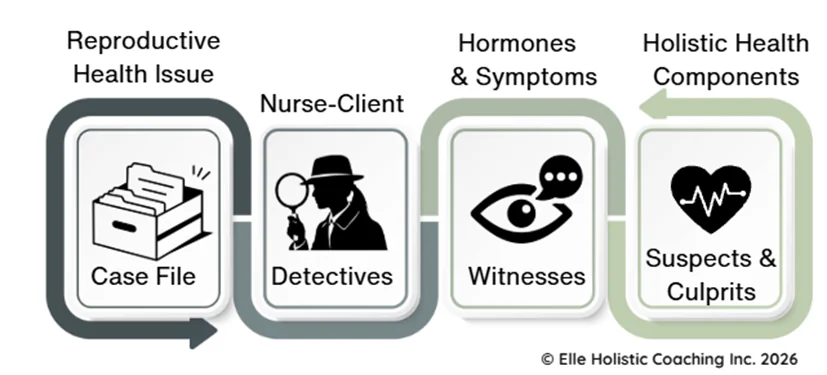
Think of hormones NOT as villains but as witnesses — the forensic evidence of your body. Their patterns tell a story. If you and I are the detectives working on your reproductive-health case, then hormones are the witnesses whose testimony points us toward underlying causes (or the suspects). Before we act, we must interpret that testimony and evidence correctly so we can identify and address the real culprits.
Hormones Defined
To make sure we speak the same language, we need to understand what hormones actually are — and which ones we mean.
Hormones are chemical messengers that bind to specific cell receptors and trigger distinct actions throughout the body. A single hormone can influence multiple functions, and any one function is often regulated by several hormones. They can’t be considered in isolation — the body runs an intricate, coordinated concert of signals.
When I talk about hormones (in this post and with clients), I am not just referring to the sex/reproductive hormones like estrogen, progesterone, and testosterone, for example. Rather, I am including many other hormones in our conversations including stress hormones, thyroid hormones, pancreatic hormones and more. Reproductive health is shaped by the whole hormonal network — not just the sex hormones.
Hormone Hierarchy
Hormone systems within the body follow ordered pathways with a myriad of cascades and feedback loops. Effective interventions often require addressing upstream mechanisms in the proper sequence to restore balanced downstream functions with the hormone system.
The functional approach usually follows this sequence: reduce chronic stress (HPA — hypothalamic–pituitary–adrenal axis), support thyroid function, then address sex hormones. Chronic HPA activation can suppress the HPT (hypothalamic–pituitary–thyroid) axis as well as the HPG (hypothalamic–pituitary–gonadal) axis, so addressing stress first makes interventions for thyroid and sex hormones far more effective. These interactions are part of the complex interplay that some describe collectively as the HPATG (hypothalamic–pituitary–adrenal– thyroid–gonadal) axis.
The Suspects: What Can Disrupt a Women’s Reproductive Health
When I work with clients, the first step is to uncover which factors are helping or hindering a women’s reproductive health. The combination is always unique to each individual — what differs is the level of impact, the frequency, and the hierarchy of those factors. We take a broad and focused, nonjudgmental deep dive across multiple dimensions of health so that we can turn clues into targeted actions.
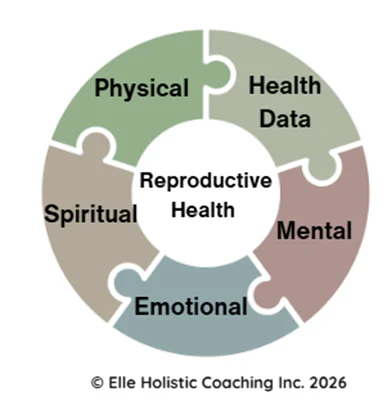
The deep dive we take explores multiple dimensions that make up your overall health — we move beyond the traditional focus on only the physical body when examining your reproductive health concerns. Rather than judging any one factor as simply good or bad, we view them as opportunities for growth and change. When we know better, we can do better!
Below is a high-level summary of research-backed “suspects” that contribute to some of the above-named reproductive health issues experienced by women.
Physical Clues: Functional & Lifestyle Drivers
Your body’s basic “terrain quietly shapes how resilient your reproductive system can be from a cellular level. Subtle shifts here can influence so much including menstrual regularity, ovulation quality, implantation, pregnancy maintenance, and how your body adapts to the natural changes of perimenopause and menopause.
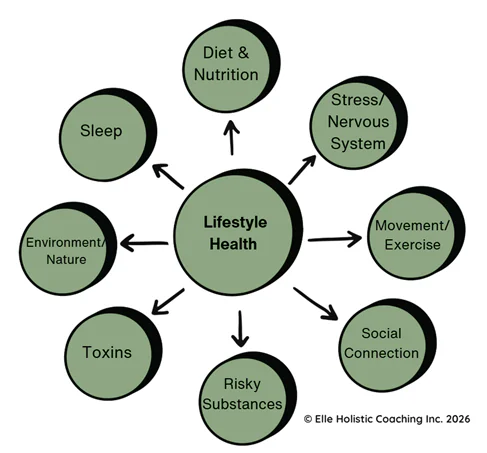
Lifestyle suspects can include unoptimized or unfavourable habits in
- Nutrition
- Sleep
- Movement
- Stress Management
- Environmental components (time outside, toxin exposure)
- Use of risky substances
- Social relationships
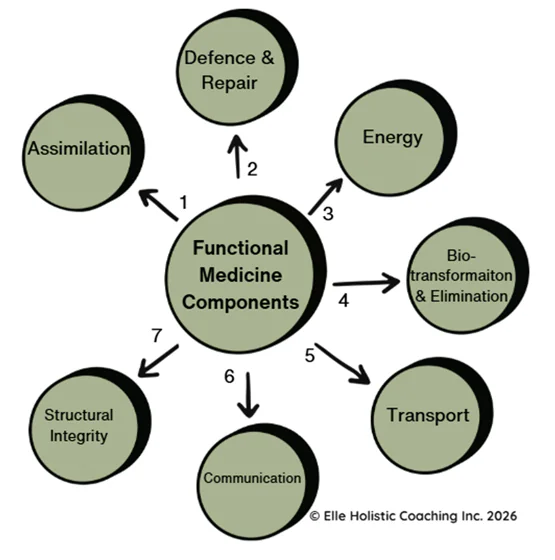
Factors from a functional medicine perspective are influenced by lifestyle health but look at the inner workings of each body system:
- Digestion, absorption, gut microbiome, respiration
- Immune system function (inflammation, infection)
- Mitochondrial function and energy regulation
- Detoxification
- Cardiovascular and lymphatic movement
- Messengers (Endocrine, neurotransmitters, immune)
- Subcellular membranes to musculoskeletal integrity
Reading the Scene: Your Hormone Patterns & Lab Tests
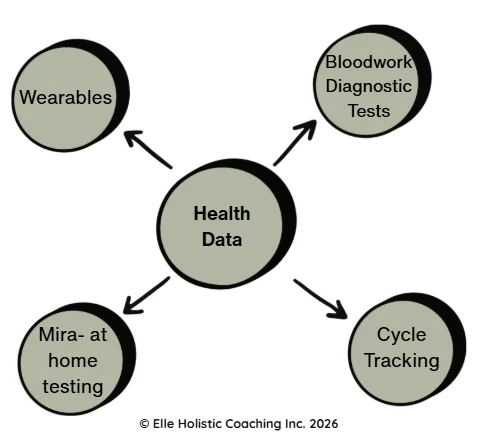
Collecting and understanding the hormone “witness statements” — like cycle tracking (Mira), wearable data, and lab work — helps to corroborate the symptoms from the body. Lab and hormone patterns (timing, amplitude, and relationships between hormones) are far more informative than a single isolated lab value. We treat tracking and lab work as a narrative about your system, helping us move from “What’s wrong with me?” to “What is my body trying to say?”
Emotional Clues: Stored Feelings and Processing
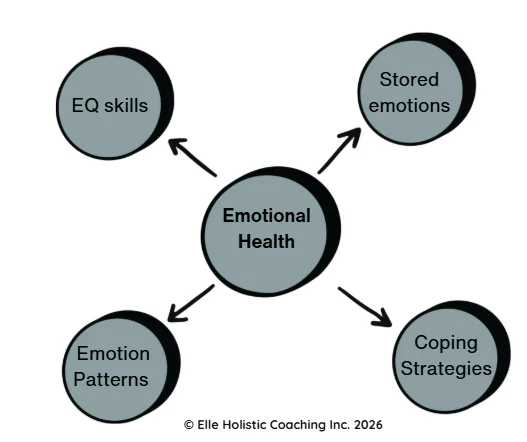
Difficult emotions are part of daily life. Emotional intelligence — being attuned to your emotional landscape, naming feelings, and using strategies to process and release them — matters. Emotions are energy: when they remain unprocessed, that energy can become stored in the body, heightening the stress response, impacting the HPATG axis, and contributing to exhaustion, depletion, and disconnection from the body.
Mental Clues: Thoughts, Beliefs & Stress
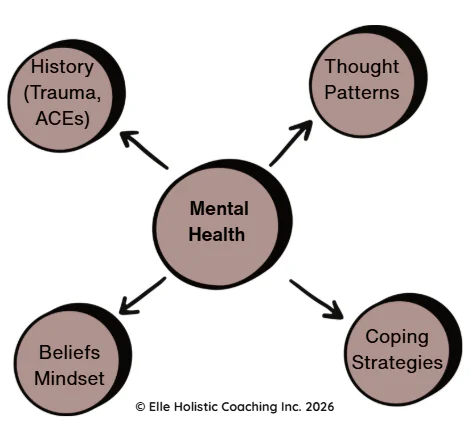
The stories you tell yourself; the thoughts, the beliefs both conscious and unconscious can either fuel chronic stress or create room for steadiness and choice. Persistent worry, perfectionism, or catastrophic thinking can keep your nervous system on high alert, which disrupts body functioning through the HPATG axis.
Purpose & Connection: The Bigger Context
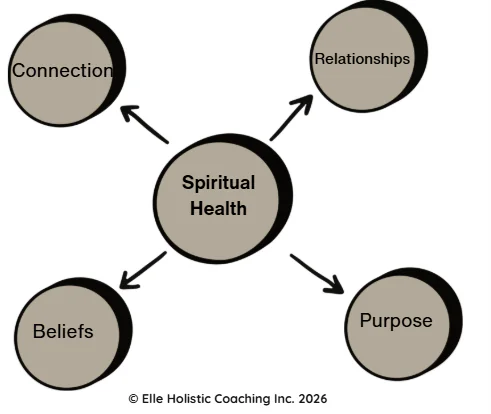
Spiritual health, meaning/purpose, social support/connection shape motivation, perseverance, resilience, coping, and the desire to make sustainable change. Strain in this area can generate stress through accompanying emotions and thoughts, which in turn influence HPATG axis functioning.
Putting the Case Together
Hormones aren’t the culprits — they’re the witnesses. Our job is detective work: collect the evidence (symptoms, tracking, labs), identify the suspects (lifestyle, body system functioning, mental, emotional, spiritual factors), and design an intervention that addresses the real culprits rather than just temporarily silencing the witnesses.
In Closing
Reproductive health is rarely about one single culprit; it’s about understanding the pattern of influences — physical, emotional, mental, and spiritual — and addressing them in the right order and approach for you.
Remember your hormones aren’t the enemy — they’re the witnesses. When we learn to read their testimony with curiosity and care, we can move from frustration to clarity and from band-aid fixes to targeted, meaningful, and lasting change.
Want to solve your reproductive health case?
Ready to start solving your reproductive-health case? Book a free 60-minute a Discovery Call and we’ll review your top concerns, what’s likely being signaled by your hormones, and the next best steps.
Want to learn more?
Join my mailing list / newsletter: Subscribe for practical tips, and evidence-based insights that show how to address root causes rather than just silence symptoms.
References:
Nussey, S. & Whitehead, S. (2001). Endocrinology: An Integrated Approach. Chapter 1: Principles of endocrinology. Oxford: BIOS Scientific Publishers.
The Institute of Functional Medicine. (2024). Hormone Advanced Practice Module Course Materials.
The Institute of Functional Medicine. (2022). Introduction to Functional Medicine: A clinical model to address chronic disease and promote well-being.